Around the world · Forecasts · OECD-FAO
How will agriculture change in the next ten years? The OECD-FAO outlook to 2035
November 2, 2026 · 3 min read
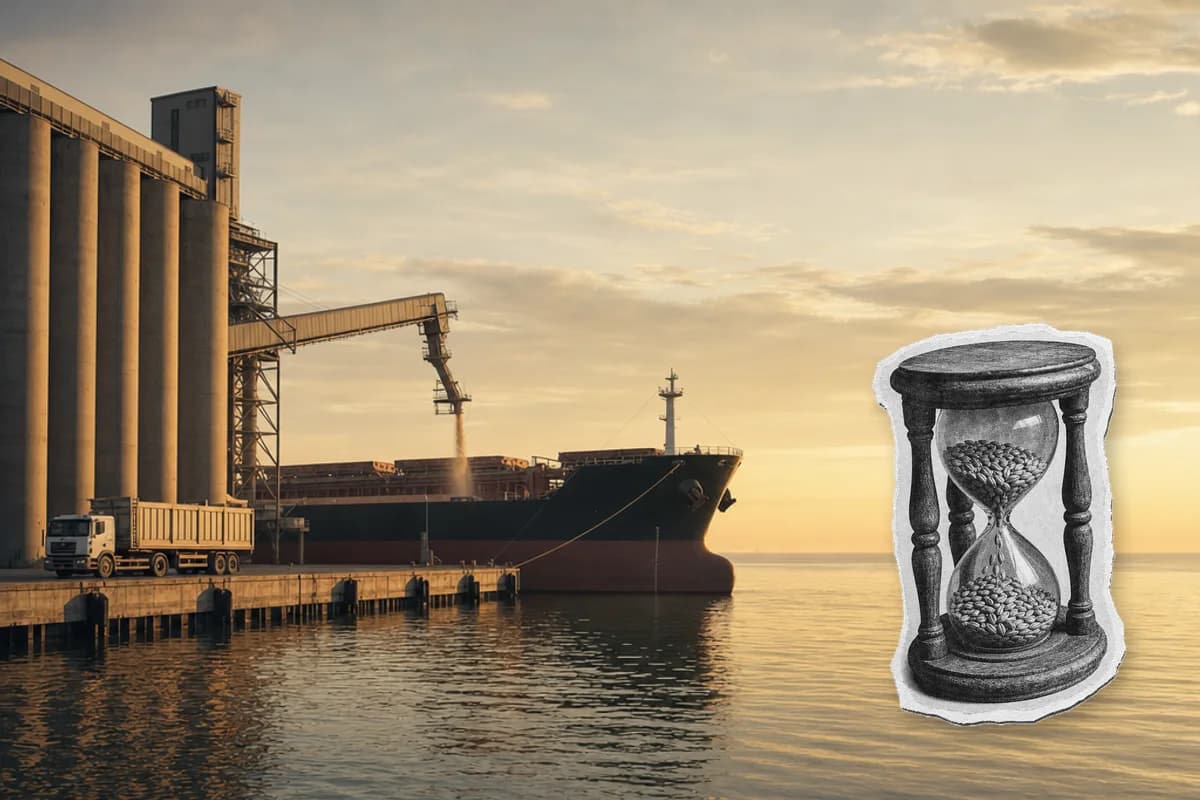
According to the OECD and FAO, the value of world agricultural output will grow by 13.3% in ten years. It will reach 4,010 billion dollars in 2035, at constant prices. Real prices will stay stable or fall below today's level. Output will grow mainly through yields: 73% of the increase in crops. Direct emissions from agriculture will rise by 6.5%. These are the figures of the 2026-2035 report, published on 29 June 2026.
1. More is produced, but not everywhere
The value of output rises by 15.1% for livestock, 12.5% for crops and 11.0% for fish. 80.3% of the growth comes from middle-income countries in Asia, sub-Saharan Africa and Latin America. India alone accounts for 25.6% of the world increase.
For North America and Europe the report forecasts limited growth, because of resource and regulatory limits. In rich countries yields grow by at most 0.5% a year for almost all products. For cereals, the world average rises by 0.9% a year, to 4.2 tonnes per hectare in 2035.
2. More is consumed, and diets change
The value of consumption grows by 12.5%. Lower-middle-income countries, led by India and Southeast Asia, bring 39% of this growth. China's share falls to 13%. In middle-income countries, as incomes rise, meat, milk and fish grow. In rich countries diets stay almost unchanged.
3. Flat prices, incomes tied to productivity
Average gross farm income per worker grows by 9% over the decade, thanks to productivity. However, the report puts the chance at one in four that in 2035 it will be at least 12% below the baseline. The risks are energy and fertilisers: the 2026 conflict in the Middle East disrupted their trade through the Strait of Hormuz.
4. More emissions, mostly from livestock
77% of the 6.5% rise in direct emissions comes from livestock and 23% from synthetic fertilisers. For Europe and Central Asia, instead, the report forecasts a 0.9% drop.
World agriculture in 2035 according to the OECD and FAO
+13.3%
value of world agricultural output
+12.5%
value of consumption
+9%
gross farm income per worker
+6.5%
direct emissions from agriculture
What it means for people who work the land in Italy
The OECD-FAO report is global. For Europe there are the European Commission's projections (December 2025). They are a baseline scenario, not a forecast.
- Less farmland. The EU's agricultural area will fall slightly, due to competition from urban areas, transport and renewable energy.
- Fewer people, more employees. EU farm labour would fall from 7.55 million annual work units in 2024 to 6.9 million in 2035. The share of hired workers would rise from 31% to 37%. The figure extrapolates the past trend in the number of farms.
- An edge for large farms. Larger farms will have better income prospects on average than small ones.
- Rising costs. In July 2026 the Commission noted that fertiliser affordability had fallen to the levels seen in 2022.
Italian data point the same way. In 2023, farms employ 2.5 million people, 35.6% fewer than in 2010 (ISTAT, Italy's national statistics institute). Family workers fell by 75.3%, while non-family workers grew by 10.8%. Farm heads under 40 are 7.9%.
For your own case, ask your farmers' association or an adviser.
If the work on your farm is growing and the family is not enough, who will you need next year? Post the job and find people looking for it.
Sources
- OECD/FAO, OECD-FAO Agricultural Outlook 2026-2035, 2026
- Commissione europea, DG AGRI, EU agricultural outlook 2025-2035
- EU Agricultural Outlook 2025-35
- Commissione europea, DG AGRI, Short-term outlook of EU agricultural markets
- ISTAT, Struttura produttiva, pratiche gestionali e forza lavoro delle aziende agricole, anno 2023
Read next
Around the world · Farm Machinery · Agriculture 4.0
Precision agriculture in Italy: where does it stand and what skills do farm machines require?
In Italy the agriculture 4.0 market was worth €2.5 billion in 2025, up 9% on 2024. 42% of farms use at least one digital solution. Yet land farmed with digital technologies is only 10% of the total. According to FAO, machines do not make work disappear: they shift it toward more skilled jobs.
Land · Farm Leases · Law 203/82
Farm leases in derogation in Italy: how they work and how they differ from the 15-year rule
A farm lease "in derogation" (affitto agrario in deroga) is a contract where the owner and the tenant agree on rules different from those of the law on agricultural contracts. It is valid only if signed with the assistance of the professional farmers' organisations. The standard rule is a minimum length of 15 years.