Why it matters · Economy · Exports
Why agriculture matters: Italy's farm economy in numbers, 2025
November 2, 2026 · 3 min read
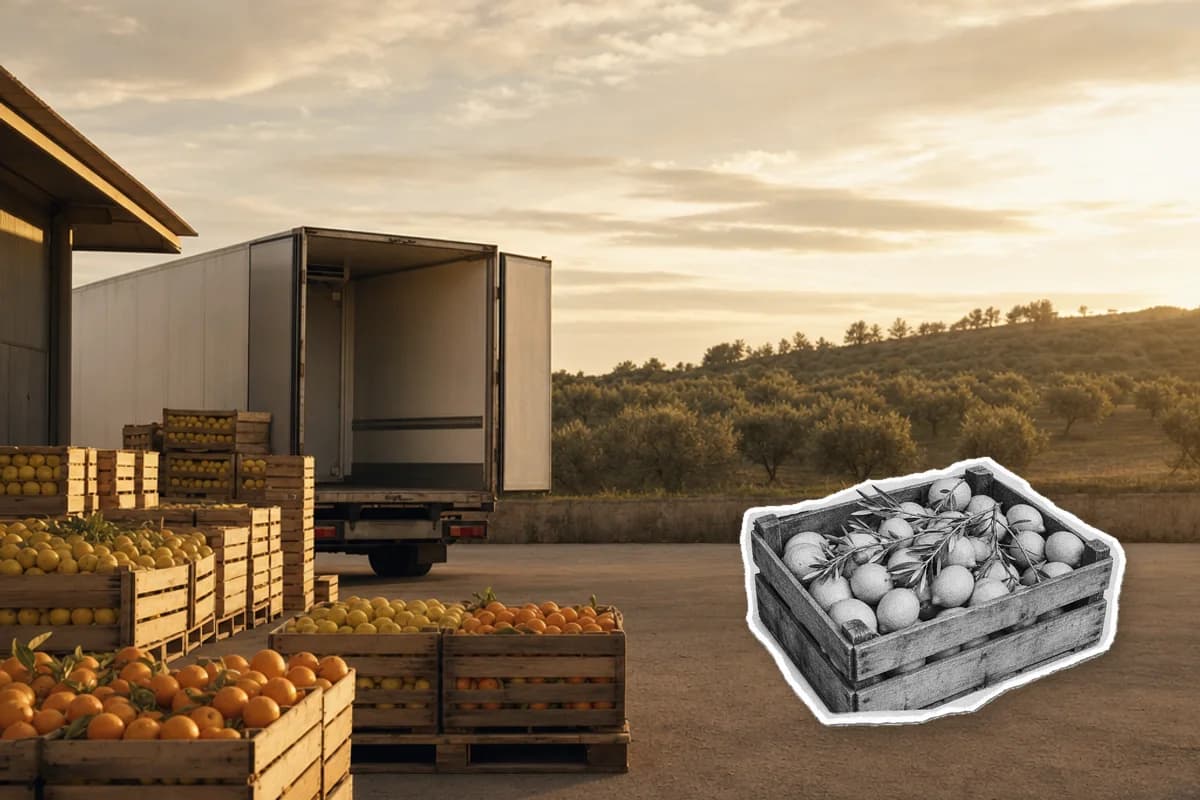
In 2025 Italian agriculture produced €80.1 billion, and Italy is the first country in the European Union for agricultural value added. Adding the food industry, the supply chain is worth €89 billion, 4.4% of the whole economy of the country. And in the first eleven months of the year, Italian food sold abroad for almost €67 billion, 5% more than in 2024.
How much Italian agriculture is worth
In 2025 agriculture, forestry and fishing produced goods and services worth €80.1 billion, 3.9% more than the €77.1 billion of 2024. Almost all the growth came from prices, which rose 3.6%: the quantities produced grew by only 0.3%.
The wealth that stays in the sector, after the costs of seeds, fertilisers, energy and services, is called value added. In 2025 it was €46.6 billion, and on this measure Italy is first in Europe.
| Country | Agricultural value added 2025 | Share of EU total |
|---|---|---|
| Italy | €42.5 billion | 16.9% |
| Spain | €41.5 billion | |
| France | €34.4 billion | |
| Germany | €32.4 billion |
European data use a different calculation method from the national one, which is why Italy is worth €42.5 billion here and €46.6 billion above (ISTAT).
If you add the industry that turns farm products into pasta, cheese, wine and preserves, the agri-food supply chain is worth €89 billion of value added. That is 4.4% of the whole Italian economy: out of every €100 of wealth produced in the country, more than €4 comes from food, from the land to the finished product.
Agricultural value added in the European Union, 2025 (billion euro)
- Italy42.5
- Spain41.5
- France34.4
- Germany32.4
How many farms and how many people
Italy has about 1.13 million farms: 1,133,023 at the last census by ISTAT (Italy's national statistics institute, October 2020) and 1,130,358 in the 2023 estimate. That is 30% fewer than in 2010, and since 1982 almost two farms out of three have disappeared. Farmed land, however, fell only slightly: there are fewer farms, but they are larger.
In 2025 farm work fell by 0.5%, but the figure hides an important shift:
- self-employed workers, meaning owners and family members, fell by 2.2%;
- employees, meaning hired workers, grew by 2.3%.
In practice, farms rely less and less on family and more and more on people they need to find and hire.
Then there is work done by others on the farm's behalf. Support activities to agriculture, such as contract farming work, are worth €8.6 billion. They cost more in 2025, and according to ISTAT it was contract farming work that pushed up farm costs.
Italian food in the world
In the first eleven months of 2025 Italy exported agri-food products worth almost €67 billion, 5% more than the year before. For the full year, ISMEA (Italy's institute for agri-food market services) expects a close around €73 billion, which would be the highest value ever.
In the same period, exports from the whole Italian economy grew by 3.1%: food is growing faster than the rest of the country. Farmers in Italy have a market that reaches far beyond its borders.
What it means for those who work the land
These numbers say three concrete things.
- Land produces value, not just a harvest. By value of production Italy is only fourth in Europe, behind France, Germany and Spain, yet it is first for value added: what matters is what you grow and how much value stays with those who grow it.
- Work is changing shape. Owners and family members are falling, employees are growing. Finding the right people has become part of the job of running a farm.
- Idle land is lost value. In a sector that grows in value and sells more and more abroad, every uncultivated hectare is a missed opportunity, for the owner and for whoever would work it.
Agriculture is not a sector of the past: it is a sector where Italy is first in Europe. The question is whether your farm has the people it needs to keep up. If the answer is no, starting to look for them today costs less than giving up the next harvest.
Sources
Read next
Why it matters · History · Sharecropping
How did agriculture begin and how did it change the history of Italy?
Agriculture was born in the Near East, where the first plants were probably cultivated about 10,500 years ago. From there came villages, cities, writing and the calendar. In Italy it shaped the landscape: 5.7 million people worked in the primary sector in 1961, today about 800,000 (ISTAT, Italy's national statistics institute, 2024).
Land · Farm Leases · Law 203/82
Farm leases in derogation in Italy: how they work and how they differ from the 15-year rule
A farm lease "in derogation" (affitto agrario in deroga) is a contract where the owner and the tenant agree on rules different from those of the law on agricultural contracts. It is valid only if signed with the assistance of the professional farmers' organisations. The standard rule is a minimum length of 15 years.